



What does the construction industry still misunderstand about its workforce?
A customer profile can tell you who someone is. Spending time with that person can change your understanding of what they need. That is where We Speak Pro begins.
Sometimes, we think we already know the answers.
We have an audience profile, a sales report, a campaign that worked before, and stories from our sales reps. All useful. But there is something about spending time with Pros, asking questions and actually listening, that a report alone cannot give you.
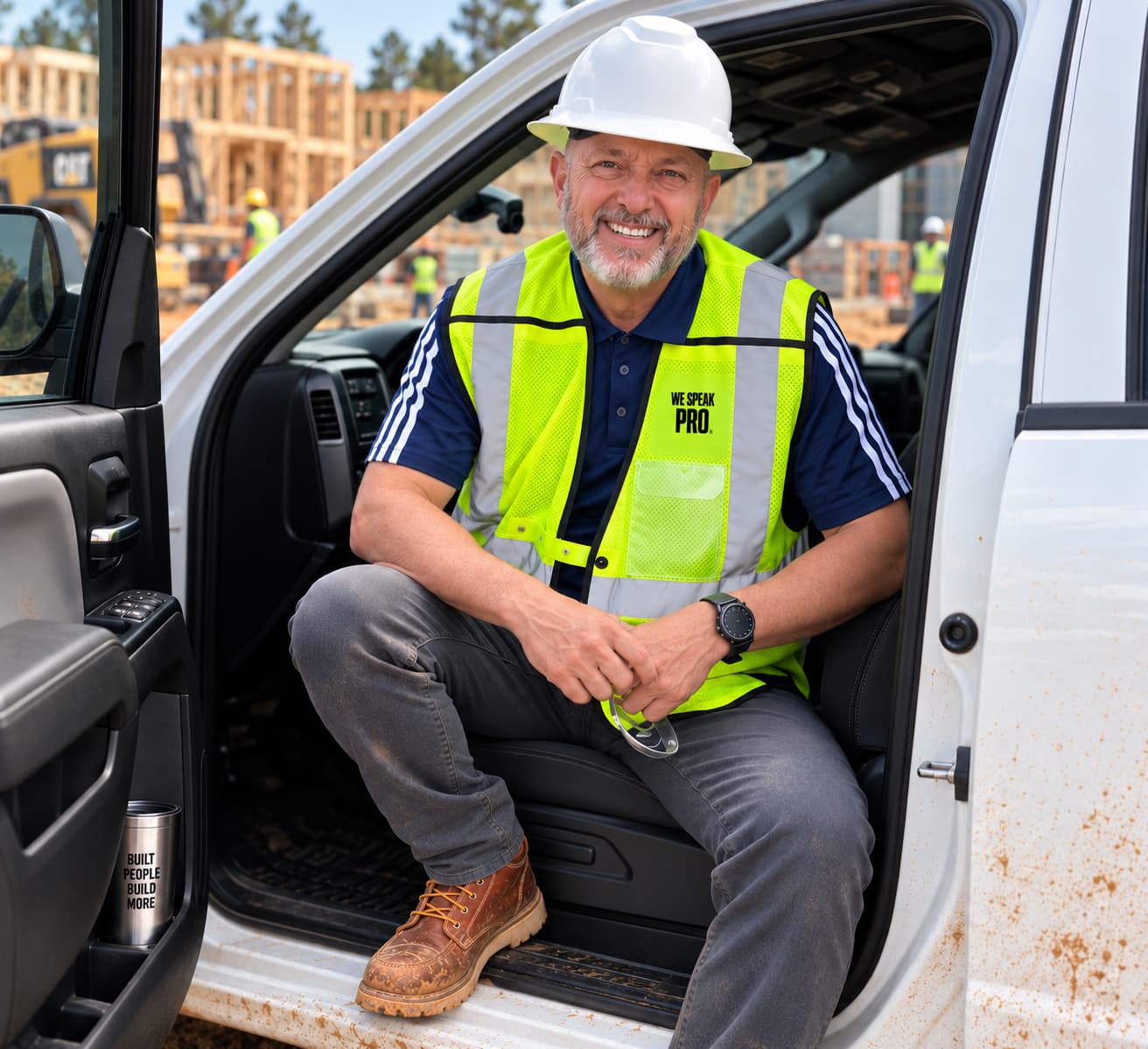
For more than 20 years, I’ve been having those conversations. On jobsites. In building material yards. Through research interviews and construction associations. Asking people why they choose certain products, whom they trust, and what they want to build for themselves.
Honestly? It is the most interesting and rewarding part of my job.
It is also why we created We Speak Pro.
Look closer. There is more to the story.
Take Hispanic Pros. Even when two people speak the same language and work in the same trade, they may be at very different points in their lives and careers.
For many of the Pros I have met, construction is a path toward becoming their own boss. Running a crew, finding customers, and managing a business are milestones along that journey. Each brings different needs, and different opportunities for brands and organizations to be useful.
Where is your customer on that journey? Are you helping with what matters to them right now?
Then there are women in construction. We need to hear about their experiences across the field, the industry, and leadership. What helped them get started? What makes their work harder? What helps them stay and advance?
Their answers can inform decisions about equipment, communication, services, and opportunities. We need to ask, then be intentional about acting on what we hear.
And there is the emerging construction generation I call C-Gen: younger entrants and career changers bringing varied backgrounds, digital skills, and educational experiences into the industry.
Where do they turn when they need an answer? What do they expect from a brand, an employer, or an association? How do they see their future in this business?
These groups overlap. A young Hispanic woman entering construction may be part of all three. One label will only tell us part of the story.
A change the sales report might not explain
Here is something I am hearing in the field that deserves more attention.
Fear surrounding immigration enforcement is affecting some construction workers who are legally in the country, too. Some are hesitant to go to jobsites. Some are avoiding trips to places such as Home Depot and Lowe's. I am also hearing about workers relying more on jobsite delivery rather than making the trip themselves.
That is field observation. I cannot tell you how widespread it is, but it is happening. And it should make us curious.
Reporting described fear among construction workers, including a legally present worker outside a Charlotte Home Depot. That supports taking the concern seriously. Even if it does not explain us how many customers have changed their shopping habits. [S1]
At the same time, Home Depot reported higher sales and higher net earnings in the second quarter of fiscal 2026. But those results do not isolate the effects of immigration enforcement on particular customers or markets. [S2]
So, we need to ask a different question: what might be changing underneath the sale?
If a Pro still buys the materials but changes how they get them, the order tells us one thing. Maybe the delivery saves time. Maybe it keeps the crew working. Maybe, for a particular customer, it helps them avoid a trip they are afraid to make. Let’s find out what is behind it.
What does listening have to do with business?
A lot.
For a retailer, this raises questions about delivery capacity, service costs, order size, and the chance to speak with customers in the store. Those are questions to investigate. For a manufacturer, it raises another question: if the person using your product no longer walks past your display, where does the recommendation happen now?
For an association, it may reveal a concern that members have not brought yet into a formal meeting.
The human situation matters in its own right. Understanding it helps organizations make better decisions.
The questions do not have to be complicated.
“Who usually picks up your materials?”
“Has that changed?”
“What would make this easier?”
“Who chooses the product, and who places the order?”
“What do you wish brands understood about your work?”
Simple questions can open conversations we should have been having all along.
That is what you can expect from Ask Pacino
I will share what I am hearing on jobsites, in material yards, and across the construction community, alongside research that helps us see the bigger picture.
We Speak Pro is a knowledge hub powered by AC&M. We will explore research and insights, culture and communications, lessons from the field, and industry trends and news. The purpose is practical: help leaders understand the people and how their decisions affect and build stronger connections with them.
I will bring my point of view, of course! And I hope that you keep me real by telling me what I am missing.
That is how WSP will earn your trust: by staying close to the jobsite, asking good questions, and connecting what we learn to the decisions you need to make.
The people building America have plenty to tell us.
Come listen with me.
Explore WeSpeakPro.com and subscribe to the WSP newsletter.